Performance Status Nutrition
Maturity Matters
Puberty and Advancing Age can impact our immunity. Learn about these major milestones and how they can impact our performance.
GENERAL IMMUNE SYSTEM CATEGORY
1/25/20266 min read
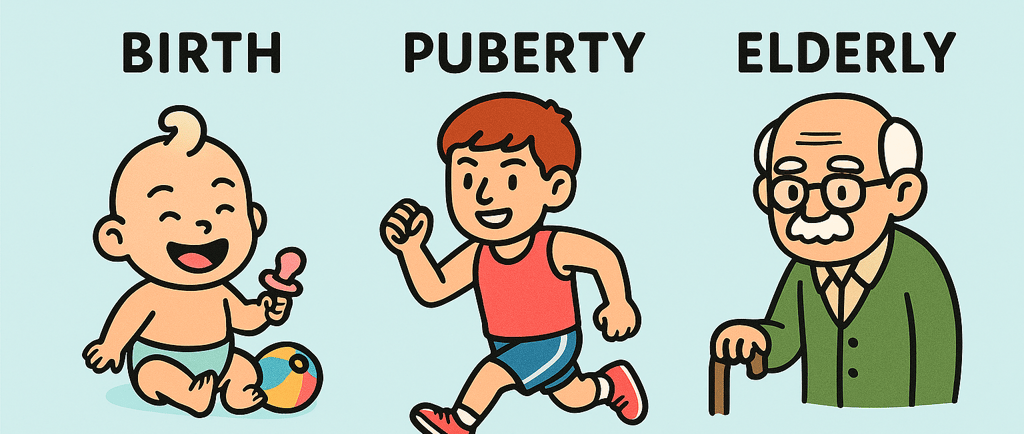
Before we are born, we are dependent on our mother for immunity against infections or viruses. After birth, our immune system is very immature, and we have to develop immunity through sickness or vaccinations. Early childhood provides many opportunities for our immune system to develop and gradually mature. Puberty is another important developmental period for the immune system as hormone changes occur causing significant adjustments. By the time we are adults, we have created a robust immune system ready to tackle a plethora of illnesses. As we get much older, not only does our face and hair show its age, but the immune system also shows its age and weakens. This article will address changes that occur during puberty and advanced age.
Puberty
Several Changes occur during puberty that affect our immune system. Studies have shown that teenagers may experience vulnerabilities and susceptibilities to infections including an increase in autoimmune diseases. Gender differences become apparent during this time. Below are some of the changes that occur during and after puberty.
Increase in hormones
Estrogen moves CD4 cell populations to a more pro-inflammatory subtype making females at higher risk for autoimmune disease after puberty.
Androgens such as testosterone can have an indirect anti-inflammatory effect helping immunity due to reduced inflammation yet testosterone causes a reduced antibody response. Males also have lower T cell subsets that increase risk for viral infections. Males have protective effects against autoimmune diseases.
Increased cortisol levels as a result of hypothalamic–pituitary–gonadal axis (HPG). This is connected to a stronger reaction on the body to stressors of any kind. These changes may also in part contribute to increased amounts of anxiety and other mental health problems.
Increase in growth hormone resulting in rapid growth spurts.
Thymus gland changes
The Thymus gland reaches its maximum size right before puberty. After puberty the Thymus gland decreases in size which happens as a result of sex hormones effect on Thymic tissues. This change also creates a decline in Treg cells altering CD4/CD8 ratios. More so in females than males.
Gut Microbiome adjustments - estrogen and testosterone affect the gut microbe levels and diversity. Additionally, the microbes in the gut also produce estrogen and testosterone. A healthy gut microbiome is key for healthy brain development.
Muscle and Bone Growth and Maturation - the increases in growth hormone and insulin-like growth factor 1 (IGF-1) allows for proper bone density and growth that may help prevent stress fractures, especially among athletes. Hormone changes during puberty have been shown to affect ligament stiffness which can be a factor in sports injuries. Young females seem to have a higher risk for ACL injuries than males and this may be due to different collagen make-up than in males. Other sex-biased sports injuries have been noted in young athletes and suspected reasons include hormonal differences, bone and muscle differences as well as bone shape and slope.
Maturation of innate immune cells, especially microglia cells that assist with brain development. These cells will continue to mature into adulthood.
Adaptive immunity continues to mature, and antibody development continues to help develop memory of infections and becomes strong and quick upon exposures.
Increased social interactions during the teen years increases exposure to bacteria and viruses but may also increase emotional stress and lack of sleep all leading to reduced ability to fight infections.
It is not surprising that growing teens have unique vulnerabilities that may affect their overall health and immunity during and long after puberty. Sex differences become very apparent at this time as their unique sex hormones influence their immune, bone, muscle and brain cells at a time that is also emotionally and socially challenging. This is especially important for parents, teachers and coaches to understand. When teenagers are also athletes, it is important for us to remember that while they are training and pushing their bodies limits in their sports activities, that their body is also trying to meet the demands of growth, adjusting hormonally on less sleep and higher amounts of stress. If not well cared for, illnesses arise and some can have life-long lasting effects.
Advanced Age
Age is the number one risk factor for disease. Immune aging, referred to as immunosenescence, is the gradual decline in our immune response. Age-related changes that place elderly people at risk for cancer, decreased performance status and immune dysfunction are highlighted below.
Decreasing sex hormones
Lower estrogen and progesterone may result in
Direct effect on bone cells (bone formation and resorption) leading to osteoporosis and osteoarthritis.
Protein turnover, muscle cell death, decreased IGF-1 all lead to muscle loss and weakness.
Increased cytokine release and inflammation in many organs leading to many chronic illnesses including: diabetes, cardiovascular disease, pulmonary disease, kidney disease.
Lower testosterone impacts
Decreased androgen levels have been found to decrease muscle, increase adipose tissue, increased fractures and falls, decreased sleep duration and higher rates of obstructive sleep apnea.
Testosterone has a number of neuroprotective features therefore when levels decrease, there is an increased risk for brain atrophy.
Thymus gland shrinkage causing decreased T-cell function
Dysregulation of Treg cells with aging causes both a decrease in immune response and increase in autoimmune reactions.
With less output of new T cells, there is an increase in older memory cells causing a change in the CD4/CD8 ratio. The impact of this change results in decreased immune response, increased autoimmune reactions and decreased vaccine response.
B-cell function: aging B-cells result in less antibody protection as compared to younger cells.
Bone Loss: Both men and women lose bone as they age. Men lose bone at a more consistent rate unlike the sudden change for women after menopause. This decrease in bone mass increases the risk for bone fractures and reduces overall performance status.
Muscle Loss - below are very important definitions of common muscle wasting diagnoses:
Sarcopenia: low muscle loss with low muscle function as found with low handgrip measures and or slower gait speed.
Frailty: exhibit at least 3 of the following 5: exhaustion, slow gait, reduced handgrip, low physical activity, unintentional weight loss.
Cachexia: exhibit at least 3 of the following 5: fatigue, anorexia (very low appetite), decreased grip strength, low muscle mass, altered labs indicating inflammation.
Social and Lifestyle adjustments
Isolation is common in elders due to a number of reasons including physical disability, hearing challenges, cognitive alterations and depression.
Altered diet that can be a result of taste changes, dental concerns, grocery shopping difficulties and exhaustion. These diet changes also impact the microbiome health (less beneficial bacteria and higher rates of proinflammatory microbes) that have been linked to many other inflammatory diseases.
Polypharmacy is very common in the elderly including increased antibiotics further affecting gut health.
Advancing age is the perfect breeding ground for reduced performance status. Not only has our immune system been exhausted by fighting so many insults in a lifetime, but there is also a natural decline in hormones that can be protective along with weaker bones and muscles to carry our body. A lifetime of inflammation has brought on new medical diagnoses that bring with it medications that have side-effects impacting our quality of life. Understanding methods to maintain muscle, bone and gut health may go a long way to maintaining our functional ability to perform in old age.
References
Ucciferri CC, Dunn SE. Effect of puberty on the immune system: Relevance to multiple sclerosis. Front Pediatr. 2022 Dec 2;10:1059083. doi: 10.3389/fped.2022.1059083.
Boer, H.d., Terpstra, A.M., Betjes, M.G.H. et al. Pubertal stage specific changes in T-cell subpopulations in healthy individuals. Sci Rep 15, 43345 (2025). https://doi.org/10.1038/s41598-025-27212-5
Carson MD, Westwater C, Novince CM. Adolescence and the Microbiome: Implications for Healthy Growth and Maturation. Am J Pathol. 2023 Dec;193(12):1900-1909. doi: 10.1016/j.ajpath.2023.07.004.
Dixit M, Poudel SB, Yakar S. Effects of GH/IGF axis on bone and cartilage. Mol Cell Endocrinol. 2021 Jan 1;519:111052. https://doi.org/10.1016/j.mce.2020.111052.
Tosi LL, Templeton K, Pennington AM, Reid KA, Boyan BD. Influence of Sex and Gender on Musculoskeletal Conditions and How They Are Reported. J Bone Joint Surg Am. 2024 Aug 21;106(16):1512-1519. doi: 10.2106/JBJS.24.00194.
Lewis L, Valvi D, Gedaly R, Marti F. Mitochondrial unfolded protein response in regulatory T cell function: a protective mechanism in immune aging. Front Immunol. 2025 Jun 30;16:1621759. doi: 10.3389/fimmu.2025.1621759.
Liu X, Zhao Y, Feng Y, Wang S, Luo A, Zhang J. Ovarian Aging: The Silent Catalyst of Age-Related Disorders in Female Body. Aging Dis. 2025 Feb 11;17(1):132–58. doi: 10.14336/AD.2024.1468.
Liu PY, Reddy RT. Sleep, testosterone and cortisol balance, and ageing men. Rev Endocr Metab Disord. 2022 Dec;23(6):1323-1339. doi: 10.1007/s11154-022-09755-4.
Gingrich A, Volkert D, Kiesswetter E, Thomanek M, Bach S, Sieber CC, Zopf Y. Prevalence and overlap of sarcopenia, frailty, cachexia and malnutrition in older medical inpatients. BMC Geriatr. 2019 Apr 27;19(1):120. doi: 10.1186/s12877-019-1115-1.
Zhanbo Q, Jing Z, Shugao H, Yinhang W, Jian C, Xiang Y, Feimin Z, Jian L, Xinyue W, Wei W, Shuwen H. Age and aging process alter the gut microbes. Aging (Albany NY). 2024 Apr 8;16(8):6839-6851. doi: 10.18632/aging.2057